Skating is for everyone! Whether you want to skate for fun or skate to win! #SkateWithUs!
CanSkate
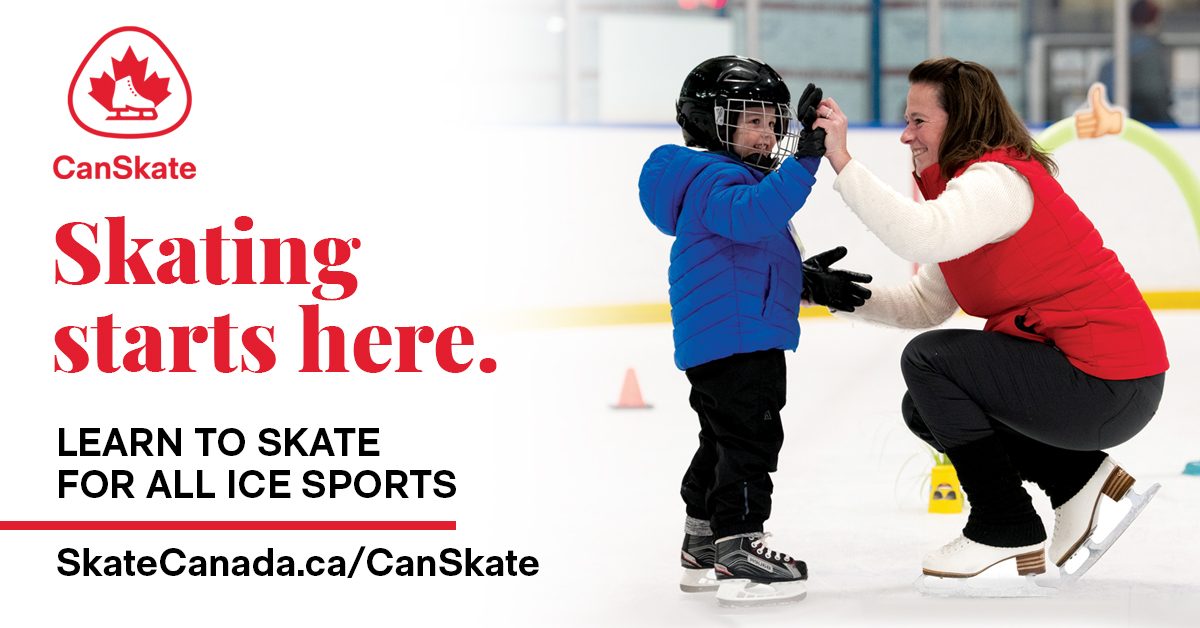
CanSkate offers the best curriculum in Canada.
Our flagship learn-to-skate program has taught millions of Canadians to reach their recreational and competitive goals on the ice.
Our CanSkate program is geared to children aged 5 years or older. Whether you are looking to improve your basic skating skills for figure skating, hockey, ringette, or speed skating, or wish to skate for recreation, fitness, or fun, CanSkate will get you there.
Conducted in a fun and friendly environment, the CanSkate program showcases a comprehensive series of balance, control, and agility skills, using a nationally tested and proven curriculum that supports skater success in developing stronger basic skills on the ice.
Millions of Canadians, including World and Olympic figure skating champions and National Hockey League stars, have taken their first steps on the ice with the CanSkate program.
Who teaches it?
NCCP-trained professional coaches, assisted by trained program assistants (PAs).
What will you learn?
A complete series of balance, control, and agility skills is taught in six stages of learning, applicable to hockey, ringette, speed skating, figure skating, and general recreational skating. CanSkate utilizes a nationally tested and proven curriculum and delivery methods that guarantee skater success.
| BALANCE | CONTROL | AGILITY | |
|---|---|---|---|
| STAGE 1 | Fall down & get up Forward skating Forward two-foot glide Forward two-foot sit glide |
Snow slide steps Backward skating Backward two-foot glide |
Stationary 180° turn Stationary two-foot jump Forward skating perimeter of ice |
| STAGE 2 | Forward sculling Forward two-foot to one-foot glide Forward push/glide sequence Forward one-foot glide with speed |
Forward stop Backward two-foot sit glide Backward two-foot to one-foot glide Backward push/glide sequence |
Forward two-foot turn Backward two-foot turn Forward 180° glide turn Forward two-foot jump |
| STAGE 3 | Forward stationary blade push Forward two-foot slalom Forward circle thrusts Walking crosscuts Forward two-foot to one-foot curve glide |
Forward stop with speed Backward sculling Backward two-foot to one-foot glide Backward push/glide sequence Backward one-foot glide with speed |
Forward two-foot quick turn Backward two-foot quick turn Forward 360° step turn Backward two-foot jump Fast forward perimeter skating |
| STAGE 4 | Forward crosscuts Forward inside giant slalom Forward outside giant slalom Forward lunge Forward spiral Drop-down drill Forward “V” start |
Backward stop Backward circle thrusts Backward two-foot slalom Backward one-foot glide with curve Sustained forward one-foot glide Speed drill #1 |
Forward one-foot turn Backward 360° step turn Forward to backward two-foot jump Backward to forward two-foot jump Two-foot spin Two-foot sit spin |
What can you expect?
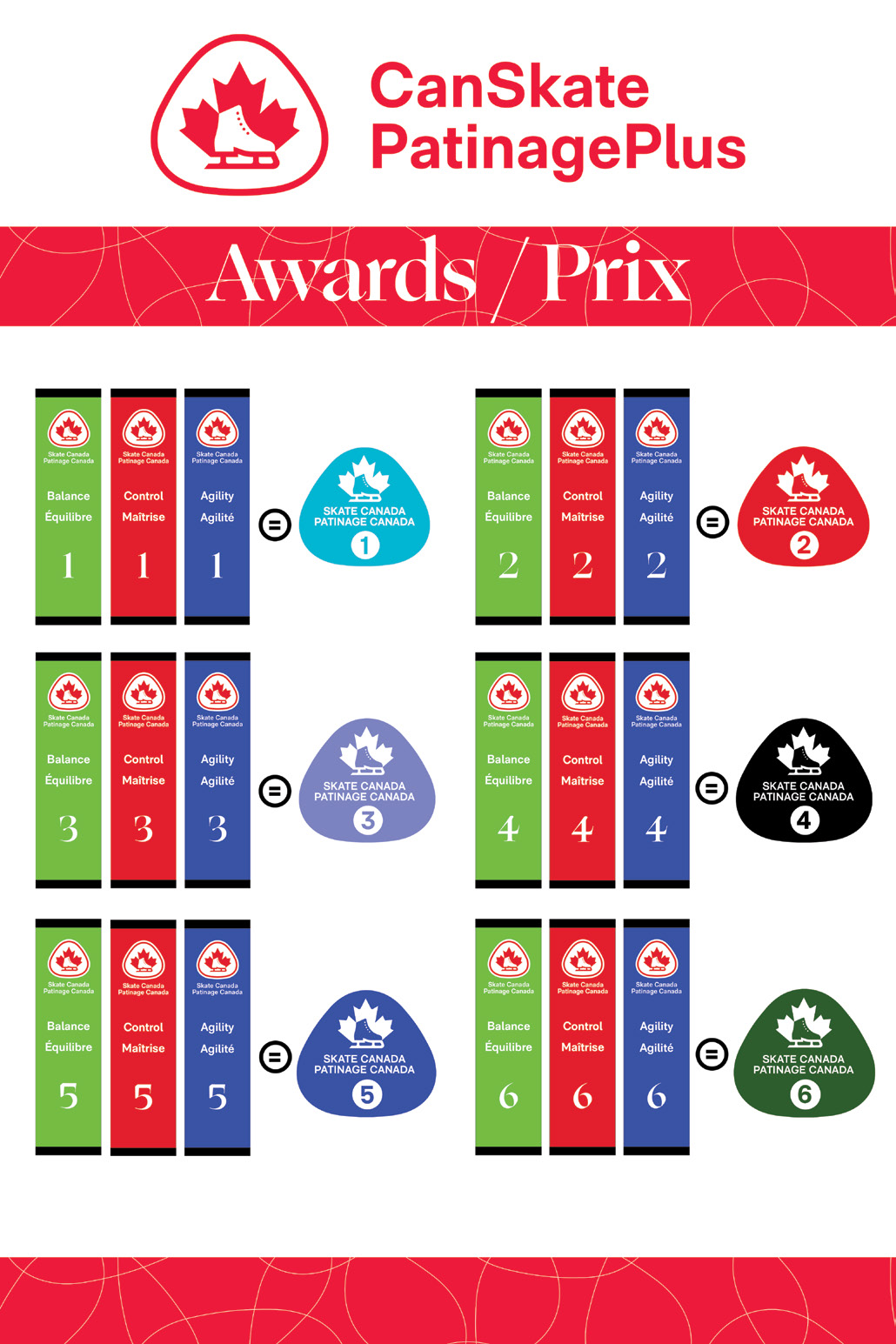
Action, movement, and fun! Lessons are conducted in a group format with a maximum coach-to-student ratio of 1:10. Coaches use teaching aids, music, and activities to create a motivating environment. Badges and ribbons help track progress.
How to Dress for the Ice
CLOTHING:
- Warm but not restrictive
- Dress in layers
- No loose clothing dragging on the ice
- No long scarves or overly long pants
- Waterproof mittens or gloves (NO hockey gloves)
- No elbow pads, knee pads, or hockey gear
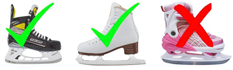
EQUIPMENT – SKATES:
- Lace-up skates (no adjustable skates — they lack proper support)
Helmet Requirements for CanSkate Programs
Mandatory Helmet Use
All skaters, regardless of age, are required to wear helmets during CanSkate sessions up to and including Stage 5. This rule applies to all events, competitions, ice shows, and any other special on-ice activities throughout the season.
Helmet Standards
Only CSA-approved hockey helmets are allowed. Helmets must not be expired.
Proper Fit
Helmets should sit one inch above the brow. Straps form a “V” around the ears and allow one finger under the chin.
Visibility & Hair
Skaters’ vision should always remain unobstructed. Ensure that all excess hair is securely pulled back and out of the way when wearing a helmet.
Additional Information
See the full Helmet Use Policy for complete details.
Face Masks
Optional, but younger skaters may benefit from added protection.


Equipment Guidelines
At the Rink: Important Information for Parents
Dressing Rooms
To help parents and skaters easily find their assigned spaces, please note that the available dressing rooms will always be either rooms 6 and 9 or rooms 7 and 10. For your convenience, current dressing room assignments are displayed on the TV screens above the small ice viewing area, specifically on the screen that is second from the right. The assignments for each time slot will scroll through on this screen, ensuring everyone can check their location before heading in.
Viewing Guidelines for Parents
We strongly encourage all parents to remain inside the arena during their child’s ice time. This is important in case your skater experiences an injury or illness or needs to use the washroom. Please remember that coaches and Program Assistants (PAs) are not permitted to accompany skaters to the washroom; this responsibility remains with the parent or guardian.
Because the small ice surface is limited in size and can be quite chilly 🥶, we kindly ask that parents, siblings, and caregivers watch from the lobby. There is not enough room in the arena for everyone, and this arrangement helps minimize distractions, allowing skaters to focus on their lessons and enjoy their time on the ice.
Schedule Changes and Missed Classes
Please note that some ice times may be cancelled or rescheduled to accommodate the number of skaters registered. Make-Ups for Missed Classes: Skaters register for a specific session and, if they must miss a day, cannot be accommodated in another session unless this has been prearranged with a coach.